
Start with a question
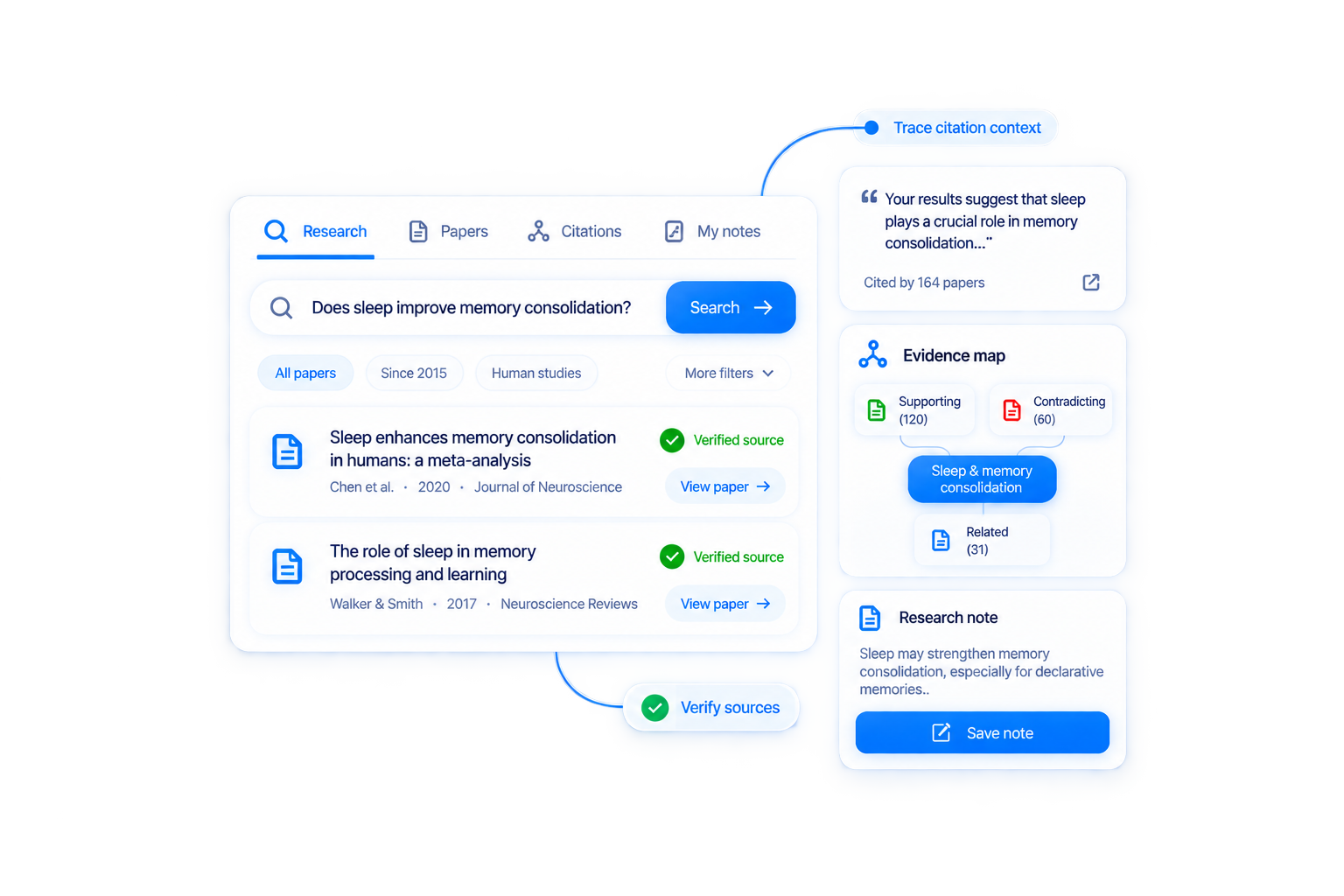
Move from a topic to a focused reading list.


Evidence-first AI research
Find the papers that matter, see why they matter, and keep every source close to your final decision.
 Source-linked insights
 Evidence in context
 An organized trail
Move from a topic to a focused reading list.

Check the evidence behind each insight.

Bring papers, notes, and references into one flow.
From question to context
Search, compare, and save the evidence behind your next decision — in one focused workflow.
 citeclarity.co / research workspace
 Interactive sample
Search the three-paper sample by topic, author, title, or DOI.
 3 of 3 sample papers
Cepeda et al. · 2006 · Psychological Bulletin
Quantitative synthesisDOI available
Cepeda et al. · 2008 · Psychological Science
Empirical studyDOI availableDunlosky et al. · 2013 · Psychological Science in the Public Interest
Research reviewDOI available This is a fixed example collection, not live AI search or a complete literature review.
 Real publication records. Curated example notes. No live retrieval is performed in this preview.
A clear path forward
Move faster without losing the source, context, or caveat behind a finding.

Explore a topic, author, paper title, or DOI. Narrow the results to a manageable starting point.

Open publication details and compare the methods, takeaways, and limits of relevant studies.

Save useful papers with your own notes. Export the references when you are ready to continue.
Your evidence-first toolkit
Everything you need to find relevant research, validate a claim, and return to the original source.
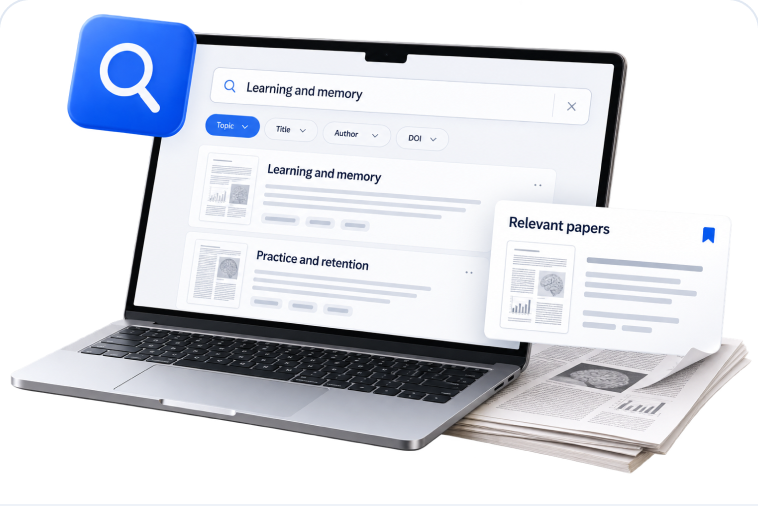

Explore research by topic, title, author, or DOI. Use available filters to refine your reading list.
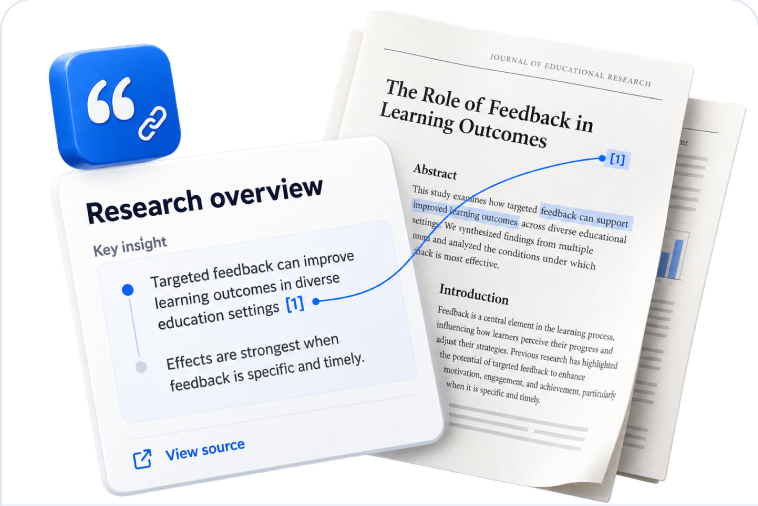

Use concise overviews to orient your reading, then inspect the original papers behind them.
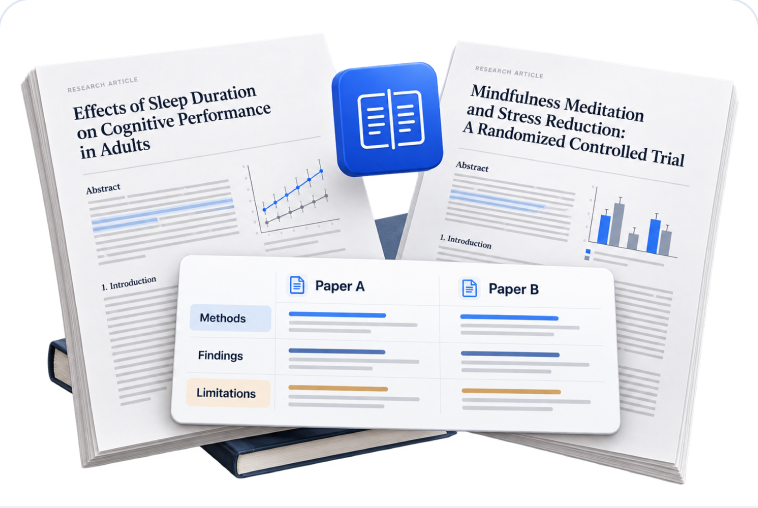

Read studies side by side. Consider the methods and limitations, not just the headline result.
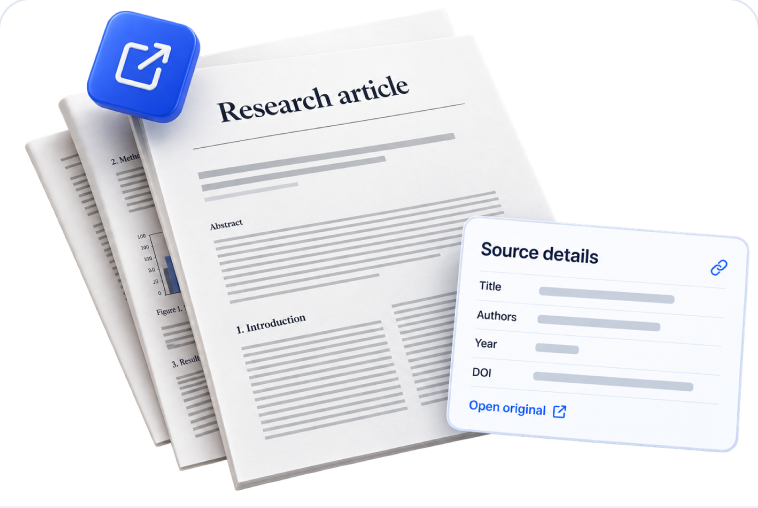

Check the title, authors, publication year, and DOI before deciding what belongs in your work.
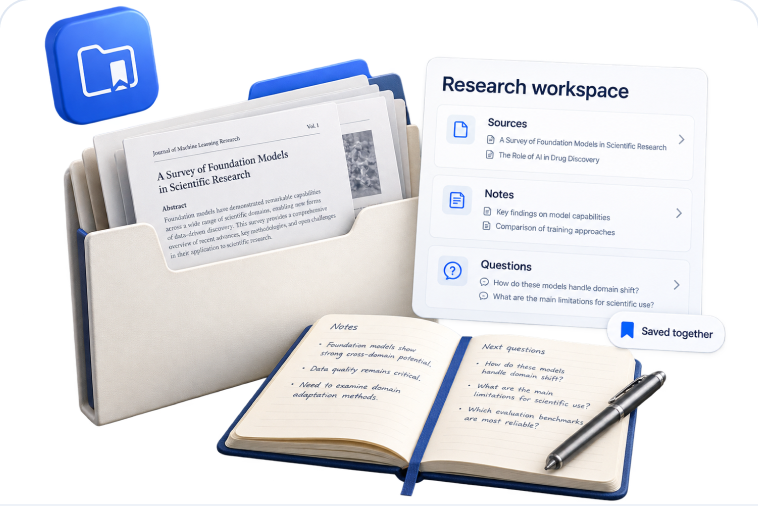

Keep useful sources alongside your notes and next questions, rather than scattered across tabs.
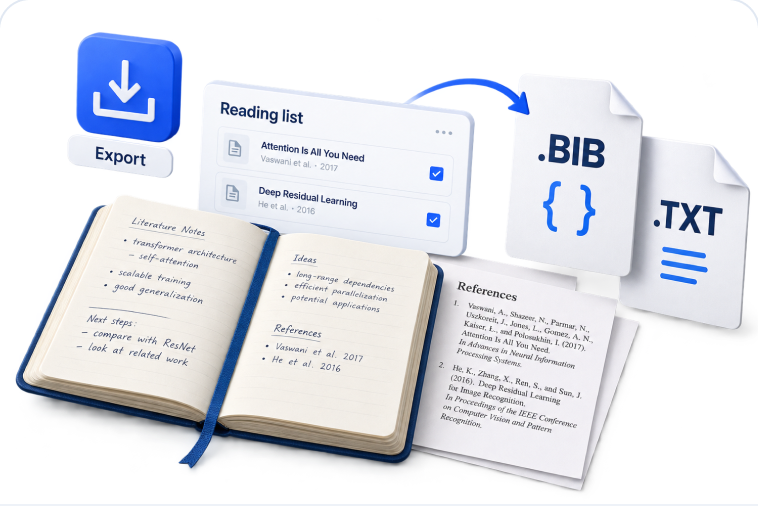

Export the sample reading list as BibTeX, or save your notes with the references as a text file.
Different questions. One clear workflow.
Whether you are writing, reviewing, or making a high-stakes decision, keep the evidence within reach.
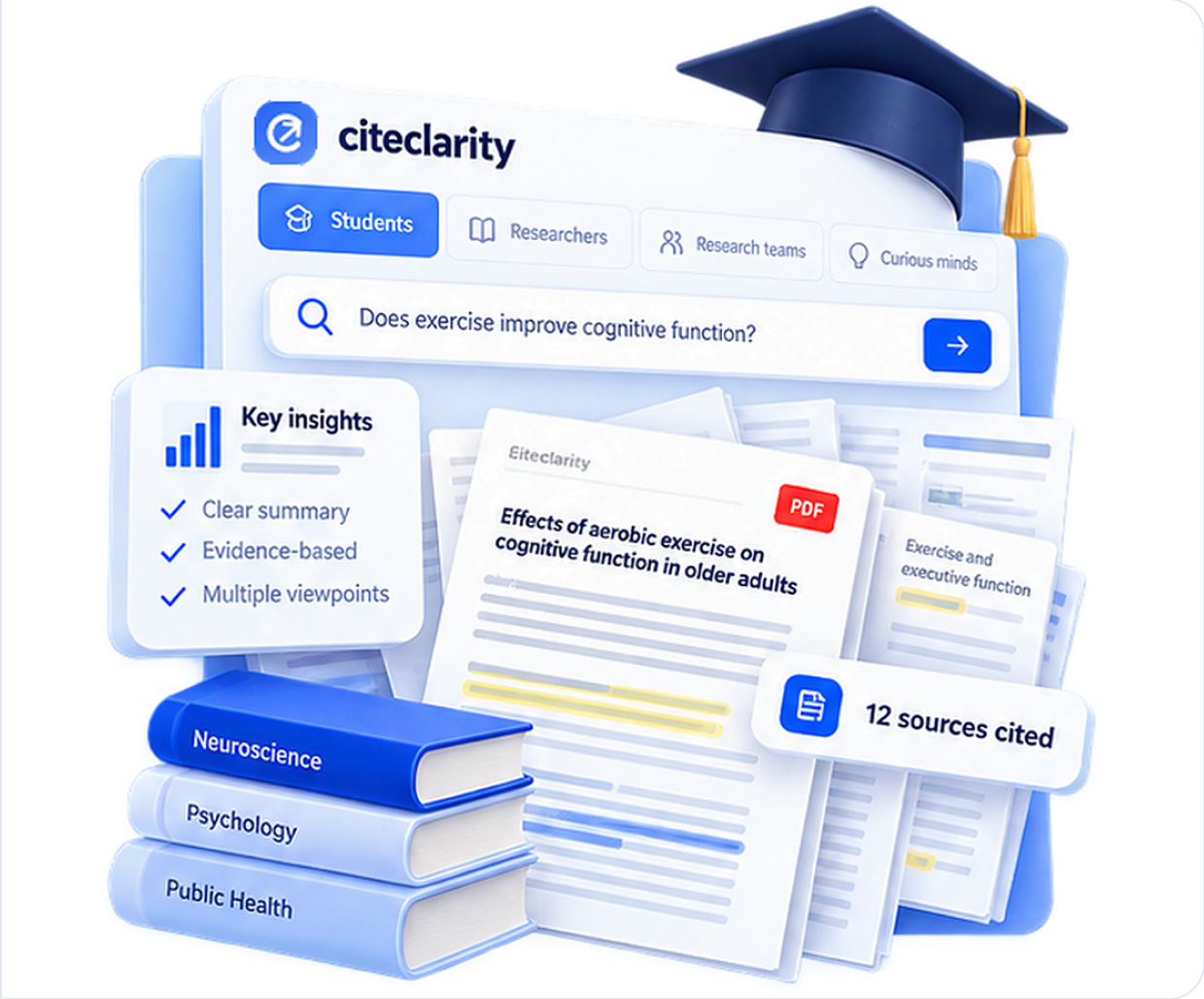
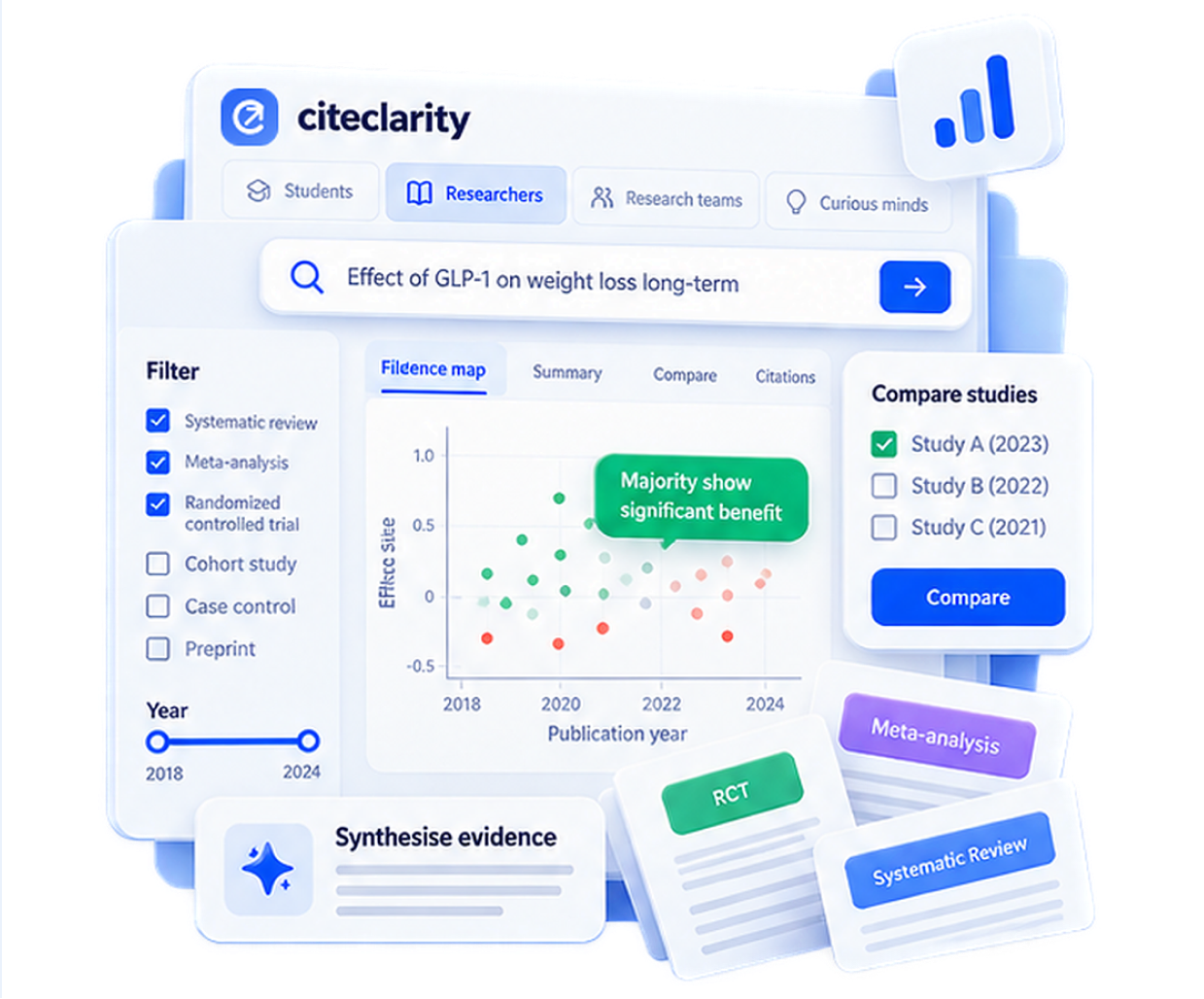
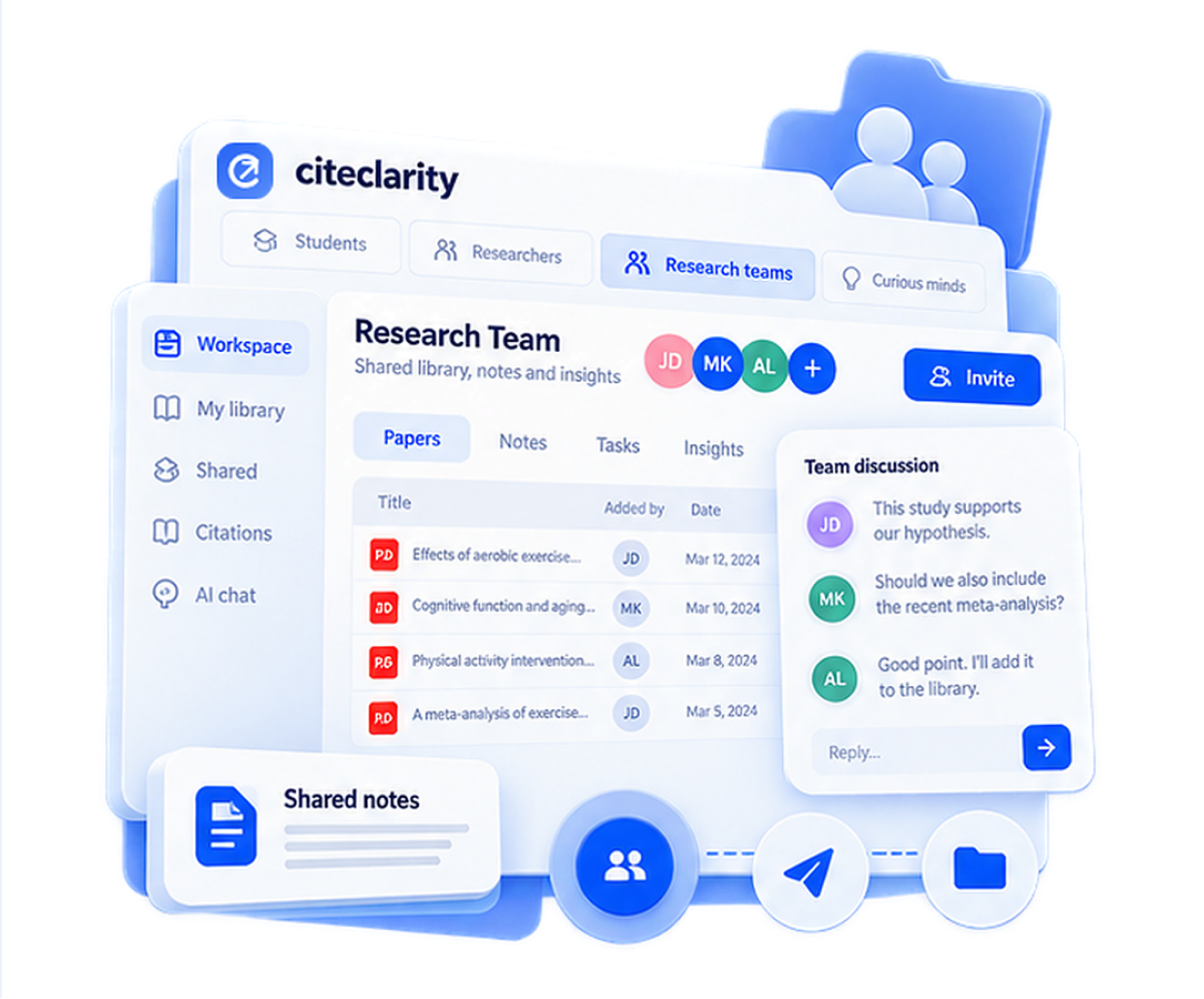
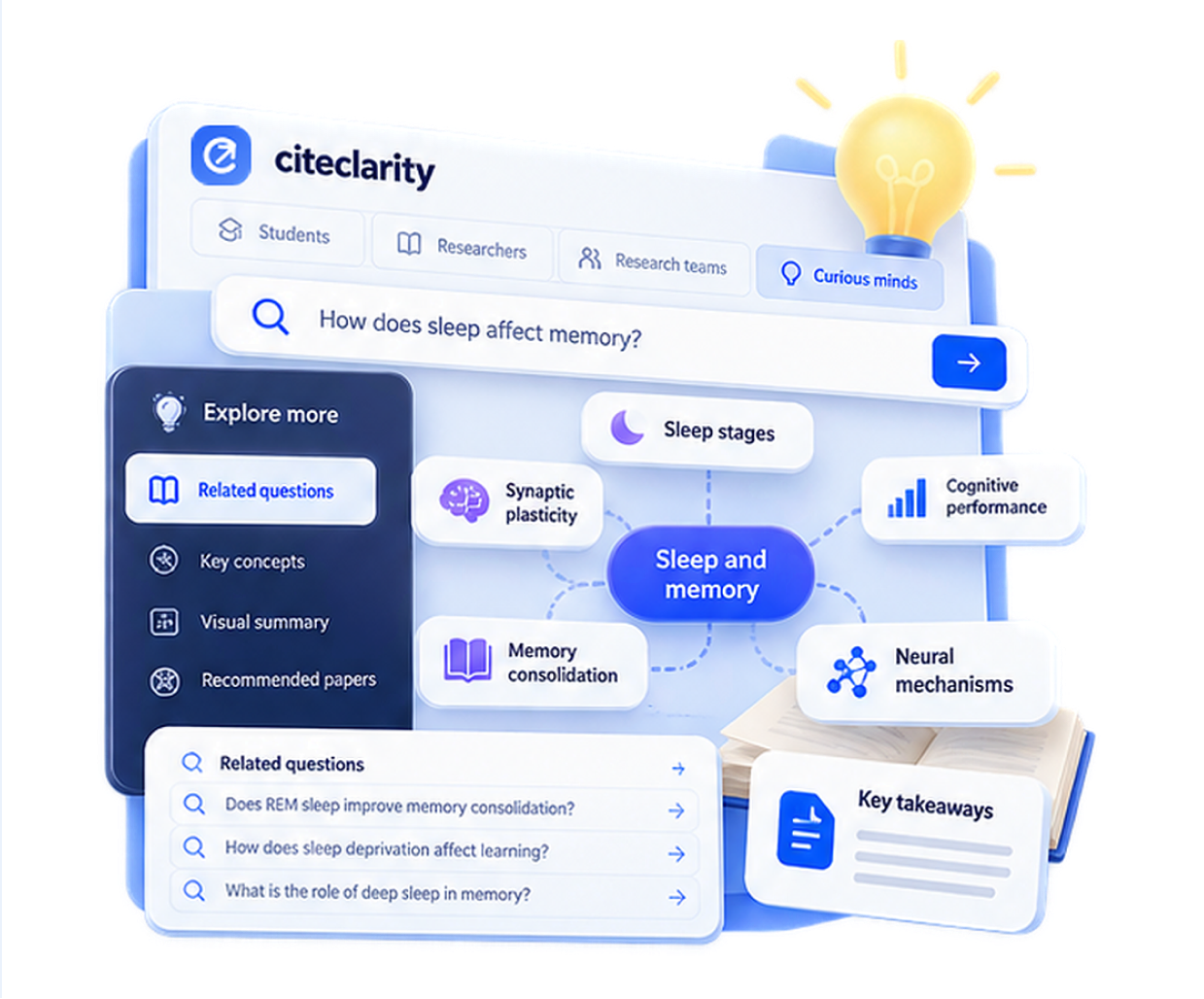
Find a starting point for your literature review. Organize the papers you want to read, and keep your own interpretation connected to the source.
 Explore the background to your topicKeep sources and reading notes togetherBuild understanding, not a ready-made paper
Clarity over certainty
Use AI to get oriented faster, then inspect the original research before you act on a claim.

Look for original publication details and read the underlying material before relying on an interpretation.

Consider study design, scope, and limitations. A citation alone does not establish whether a claim is true.

Use the workflow to support your reading and thinking, not to replace expert review or academic responsibility.
Start with the right access
Choose the right plan to find relevant papers faster and move your research forward.
Everyday research and academic writing
$19/month, billed monthly at $19
200 searches/month
Advanced literature search
Smart Citation context
Unlimited collections
Research report exports
Priority processingIntensive literature reviews and in-depth research
$39/month, billed monthly at $39
600 searches/month
Advanced literature search
Smart Citation context
Unlimited collections
Research report exports
Priority processingA little more clarity
Clear answers about sources, coverage, privacy, and how citeclarity.co supports your judgment.

CiteClarity is an AI research-search product concept focused on source visibility. This page demonstrates a workflow for discovering papers, reviewing evidence, and organizing notes.
Yes. The example includes three published papers on learning and memory. Each record provides its original title, authors, publication year, and DOI. The overview and comparison notes are curated paraphrases, not quotations or live AI output. The authors and publishers do not endorse this product.
No. Search and filters operate only on the three records included in this sample. A production search service, its data sources, indexing coverage, and AI capabilities must be connected and verified separately. The preview does not claim complete research coverage.
No. Use a summary as an orientation aid, not a final authority. AI-generated text may be incomplete or incorrect. Read the original research, check methods and limitations, and decide whether the cited material supports your particular claim.
Not necessarily. A DOI link takes you to the publication’s destination. Availability depends on the publisher and your access rights. This preview does not provide subscriptions, bypass paywalls, or grant rights to reuse copyrighted material.
Yes, within this sample. Saved papers and your notes are kept in this browser tab’s session when browser storage is available. Export the selected references as BibTeX, or download a text file containing your notes and references. Review citation metadata before using it.
The sample itself is free. Visit the pricing page for currently configured plans, billing frequency, taxes, and available offers. Individual and team inquiry cards open the feedback page; they do not create an order.
The sample search stays in your browser. Saved sample papers and notes use browser-session storage when available. Feedback is sent only when you submit the feedback form. Opening an external publication link takes you to a third-party site with its own policies. See our privacy policy for more information.


Your next question is a good place to start
Start with a question and leave with a source-backed trail you can explain.